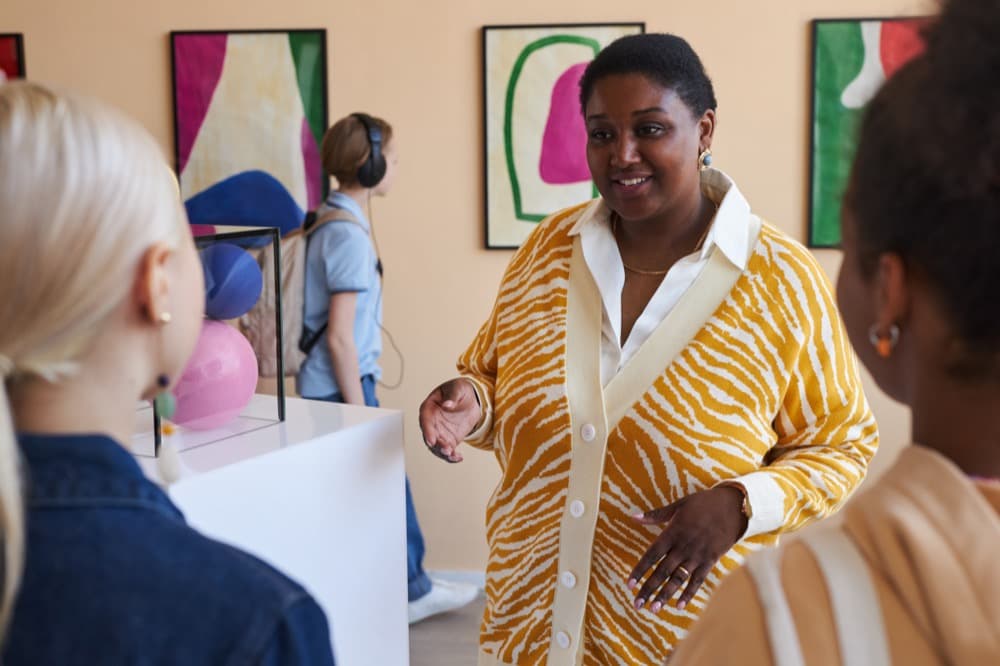
The first time you buy art at a fair, you will almost certainly remember it for the rest of your collecting life. Not because the process is complicated — it is not — but because the combination of the work itself, the gallery relationship that begins in that moment, and the particular atmosphere of the fair floor creates a kind of memory that purely transactional acquisitions rarely produce. This guide is designed to make that first purchase as confident and informed as possible.
Before You Arrive
The most important preparation you can do for an art fair is to arrive with a clear sense of what you are looking for — not necessarily a specific work or artist, but a genuine collecting direction. Are you interested in painting? Works on paper? Photography? Sculpture? Do you have a particular geographic focus — American art, European abstraction, work from the African continent? A collecting thesis, however loosely held, will prevent you from being overwhelmed by the sheer volume of material at a major fair.
Research the galleries attending before the fair opens. Most fairs publish their exhibitor list weeks in advance, and many galleries preview their presentations online. Identify six to ten galleries whose programs interest you, and plan to spend meaningful time in their booths. The fair floor rewards focus over breadth.
Bring comfortable shoes. This sounds trivial, but art fair fatigue is real and physical. A major fair like Art Basel covers the equivalent of several city blocks, and the mental work of looking seriously at art is exhausting. Comfort extends your capacity to engage.
On the Fair Floor
When you enter a gallery booth and see something that genuinely moves you — that particular quality of attention that distinguishes interest from desire — introduce yourself to the gallery representative present. This is not a high-pressure environment. Gallery staff at fairs are there to have conversations about the work, and the best ones will tell you everything you want to know: the artist's biography and career trajectory, the context of this work within their practice, the provenance if it is a secondary market piece, the edition if it is a print or photograph.
Ask about the price directly. There is nothing embarrassing about this — galleries expect it, and the price is often on the label. Do not hesitate to ask whether the gallery represents the artist, whether there are other works available to see, and whether the artist has any upcoming institutional shows or museum acquisitions. This information is not just interesting; it is part of the due diligence of collecting.
Negotiation: What Is and Is Not Acceptable
Negotiation at art fairs is common but should be handled with discretion. A gallery is unlikely to offer a significant discount on opening day, when they may have multiple interested parties. By the final days of the fair, flexibility increases. A typical courtesy discount — if the gallery likes you and wants to establish a collecting relationship — is in the range of 10 to 15 percent. Asking for more than 20 percent off a clearly priced work is generally considered poor form and may damage the relationship you are trying to build.
The more powerful lever than price is relationship. Galleries are more generous — financially and in terms of access — with collectors they know and trust. If you are building a collection seriously, the most valuable thing you can do at a fair is not find the best price; it is introduce yourself in a way that makes the gallery want to work with you for the next twenty years.
Payment and Logistics
Most galleries at international fairs accept credit cards, wire transfers, and in some cases cheques. For significant acquisitions, wire transfer is standard. When you agree to purchase a work, you will typically sign a sales agreement or invoice and pay a deposit (usually 50 percent) at the fair, with the balance due on delivery. Some galleries require full payment before shipping.
Shipping is almost always arranged by the gallery, but you should discuss it explicitly. Ask where the work is currently located (it may be at the gallery's home city, not the fair), what the shipping timeline is, and who is responsible for insurance during transit. For international shipping, you may be liable for import duties — your gallery or a customs broker can advise. Reputable galleries use specialist art shippers, and for significant works, this cost is non-negotiable.
After the Purchase
Ensure you receive full documentation with your work: a certificate of authenticity if applicable, a signed invoice, any available exhibition history or provenance documents, and care and conservation instructions. For prints and photographs, edition documentation is essential. This paperwork is not bureaucracy — it is part of the work's history and will be critical if you ever sell or donate it.
A first fair purchase is the beginning of a relationship — with the gallery, with the artist, and with your own collecting practice. The art fair world is small, it has a long memory, and the reputation you build as a collector — for seriousness, for integrity, for genuine engagement with the work — is ultimately more valuable than any single acquisition.